With its 337 metres and 100,000 tonnes, the largest aircraft carrier in the world rules the oceans
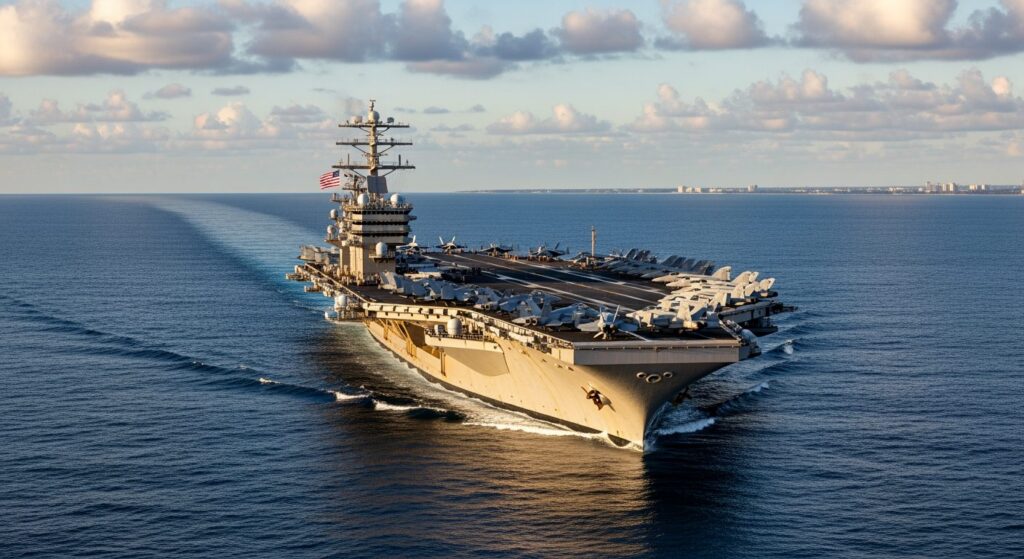
USS Gerald R. Ford aircraft carrier: The vast expanse of the world’s oceans has a new undisputed ruler, and it’s a true behemoth of naval engineering. Stretching an impressive 337 metres in length and weighing a staggering 100,000 tonnes, the largest aircraft carrier in the world now dominates maritime operations with unprecedented capability. This floating fortress represents not just a military asset but a marvel of modern engineering, combining cutting-edge technology with sheer physical presence to project power across global waters in ways previously unimaginable. The vessel’s extraordinary dimensions allow it to serve as a mobile airbase, capable of launching and recovering aircraft while sustaining thousands of personnel at sea for extended missions.
The Remarkable Specifications of the World’s Largest Aircraft Carrier
The sheer scale of this 337-metre, 100,000-tonne naval colossus sets new standards in maritime military capability. The aircraft carrier’s flight deck spans approximately 4.5 acres, providing ample space for aircraft operations regardless of weather conditions. This massive vessel can accommodate over 75 aircraft, including fighter jets, reconnaissance planes, and helicopters, making it a versatile platform for various military operations. The carrier’s nuclear propulsion system allows it to operate continuously for up to 25 years without refueling, giving it virtually unlimited range and endurance compared to conventional vessels.
Advanced Technologies Aboard the 100,000-Tonne Maritime Giant
The world’s largest aircraft carrier incorporates revolutionary technologies that enhance its operational capabilities beyond its impressive physical dimensions. The electromagnetic aircraft launch system (EMALS) replaces traditional steam catapults, allowing for more precise control when launching aircraft and reducing maintenance requirements. Additionally, the advanced arresting gear system enables safer aircraft recovery operations. The vessel’s integrated combat system coordinates defensive measures against multiple threats simultaneously, while its enhanced radar systems can track hundreds of targets at ranges exceeding 200 miles.
| Specification | Measurement | Comparison | Operational Impact | Engineering Achievement |
|---|---|---|---|---|
| Length | 337 metres | Longer than three football fields | Increased flight deck operations | Advanced structural integrity systems |
| Weight | 100,000 tonnes | Equivalent to 400 Statues of Liberty | Enhanced stability in rough seas | Revolutionary hull design |
| Power Plant | Nuclear reactors | Generates power for a city of 80,000 | 25-year operational cycle | Compact reactor technology |
| Aircraft Capacity | 75+ aircraft | Equivalent to a regional airport | Diverse mission capabilities | Optimized storage and maintenance facilities |
| Crew Size | 4,500+ personnel | Population of a small town | Comprehensive mission support | Advanced automation reducing traditional staffing |
Strategic Importance of the 337-Metre Naval Powerhouse
The strategic value of this massive aircraft carrier extends far beyond its impressive physical specifications. As a mobile sovereign territory, this 337-metre vessel enables projection of air power virtually anywhere in the world without requiring land-based airfields or diplomatic clearances. The carrier serves as the centerpiece of carrier strike groups, accompanied by destroyers, cruisers, and submarines that extend its defensive perimeter and striking capabilities. Its presence in contested waters sends powerful diplomatic signals, while its ability to rapidly deploy to crisis zones provides military planners with flexible response options that can influence regional stability and protect vital shipping lanes.
Operational Challenges for the World’s Largest Aircraft Carrier
Despite its dominance, operating a 100,000-tonne aircraft carrier presents unique challenges that naval forces must constantly address. The logistics of supplying such a massive vessel require precise coordination, with the carrier consuming approximately 150,000 gallons of aviation fuel and 35,000 pounds of food daily during active operations. Maintaining this floating city demands specialized skills across numerous disciplines, from nuclear engineering to aviation maintenance.
- Navigational constraints limit access to certain ports and waterways due to the carrier’s massive draft and turning radius
- Vulnerability to emerging anti-ship missile technologies requires constant defensive innovation
- Environmental considerations including fuel consumption and ecological impact require careful management
- Crew rotation and psychological health during extended deployments present ongoing personnel challenges
- Technological complexity demands continuous training and specialized maintenance protocols
- Operational costs exceeding $1 million per day necessitate careful mission planning and resource allocation
The world’s oceans have witnessed naval powers competing for dominance throughout history, but never before has a single vessel commanded such respect through sheer size and capability. At 337 metres long and displacing 100,000 tonnes, this floating airbase represents the pinnacle of naval architecture and military engineering. Its construction required innovations in metallurgy, propulsion, electronics, and countless other disciplines. The carrier’s ability to operate independently for extended periods transforms it from merely a vessel into a self-contained power projection platform that can influence events thousands of miles from its home port.
As geopolitical tensions evolve in maritime regions worldwide, the significance of this naval behemoth only grows. Its presence can stabilize volatile situations or demonstrate resolve during international disputes. The carrier’s flight operations can launch dozens of sorties daily, providing reconnaissance, strike capabilities, or humanitarian assistance depending on mission requirements. While its primary purpose remains military, the vessel can also respond to natural disasters, evacuate civilians from danger zones, or provide medical support in crisis situations, making it a versatile asset beyond combat operations.
The technological innovations pioneered aboard this massive carrier often find applications in civilian sectors as well. Advanced materials developed for its construction improve commercial shipbuilding, while its power management systems influence energy grid designs. The carrier serves as both a demonstration of national technical capability and an incubator for technologies that eventually benefit society more broadly. As naval warfare continues to evolve, this 337-metre, 100,000-tonne maritime giant remains at the forefront of both military strategy and engineering excellence.
FAQs
Q: How long is the world’s largest aircraft carrier?
A: 337 metres
Q: What is the weight of this naval vessel?
A: 100,000 tonnes
Q: How many aircraft can it carry?
A: Over 75 aircraft
Q: What type of propulsion system does it use?
A: Nuclear propulsion
Q: How many crew members serve aboard?
A: 4,500+ personnel