With its 337 metres and 100,000 tonnes, the largest aircraft carrier in the world rules the oceans
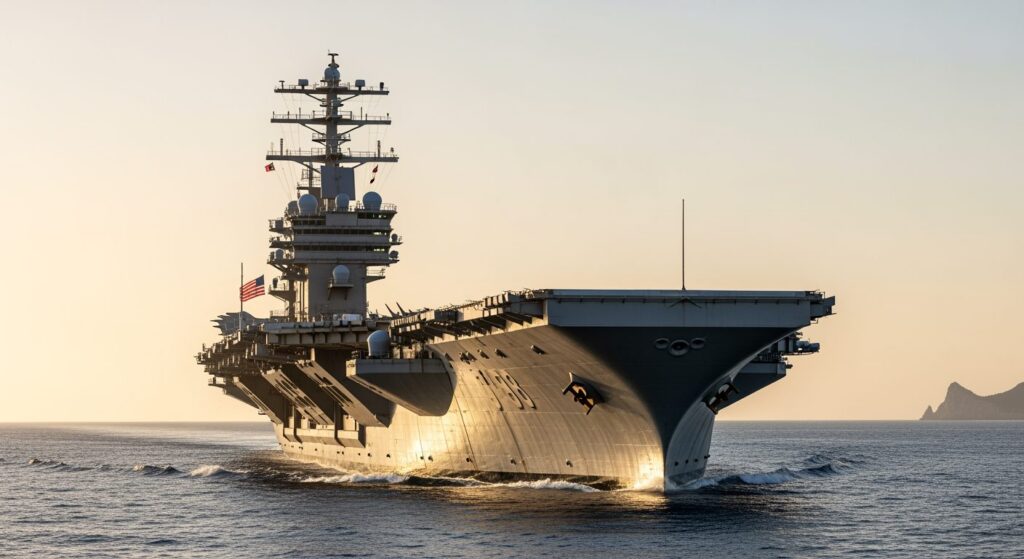
USS Gerald R. Ford aircraft carrier: The oceans have a new undisputed ruler, and it’s a true marvel of modern naval engineering. Stretching an impressive 337 metres in length and weighing a staggering 100,000 tonnes, the world’s largest aircraft carrier represents the pinnacle of maritime military power. This floating fortress combines unprecedented size with cutting-edge technology, allowing it to project force across the globe while housing thousands of personnel and dozens of aircraft. As tensions rise in various hotspots around the world, this naval behemoth stands as both a technical achievement and a powerful symbol of military dominance on the high seas.
The Remarkable Specifications of the World’s Largest Aircraft Carrier
The sheer scale of the world’s largest aircraft carrier is difficult to comprehend until you consider the numbers. At 337 metres long—roughly the length of three football fields placed end-to-end—and displacing 100,000 tonnes of water, this naval giant dwarfs many of its predecessors. The flight deck alone spans approximately 4.5 acres, providing ample space for aircraft operations even in challenging conditions. This massive vessel can reach speeds exceeding 30 knots (about 56 km/h), allowing it to rapidly deploy to crisis zones despite its enormous size. What makes these specifications even more impressive is that they support a floating city of roughly 4,500 sailors and airmen who call this maritime colossus home during deployments.
Revolutionary Technology Aboard the Largest Naval Vessel
| Technology | Previous Carriers | World’s Largest Carrier | Improvement | Operational Impact |
|---|---|---|---|---|
| Propulsion System | Nuclear Reactors (A4W) | Advanced Nuclear Reactors | 25% More Power | Extended Range, Higher Speed |
| Aircraft Launch | Steam Catapults | Electromagnetic Launch System | 30% More Efficient | Faster Sortie Rates, Less Stress on Aircraft |
| Power Generation | 210 MW | 300+ MW | 40% Increase | Support for Future Weapons Systems |
| Automation | Limited | Extensive | Crew Reduced by 600+ | Lower Operating Costs, Improved Efficiency |
| Radar Systems | Conventional Arrays | Advanced Dual-Band Radar | 50% Greater Range | Enhanced Threat Detection, Improved Defense |
Strategic Importance of the 100,000 Tonne Maritime Giant
The strategic value of the world’s largest aircraft carrier extends far beyond its impressive dimensions. This 100,000 tonne behemoth serves as a mobile air base that can be deployed anywhere with ocean access, effectively extending a nation’s military reach across the globe. Unlike land bases that require diplomatic agreements and fixed infrastructure, this floating airfield can rapidly reposition to respond to emerging threats or humanitarian crises. The carrier’s ability to launch and recover dozens of advanced aircraft makes it a formidable power projection platform, capable of controlling vast areas of airspace and sea lanes critical to international commerce and security operations.
Daily Life and Operations on the 337-Metre Naval Colossus
Life aboard the 337-metre aircraft carrier resembles a bustling city more than a traditional naval vessel. The daily routine for the thousands of personnel involves a complex choreography of activities that keep this floating metropolis functioning around the clock. From the thunderous flight operations on the deck to the precisely coordinated work in the engineering spaces far below, every sailor and officer plays a vital role in maintaining this maritime giant’s capabilities.
- Flight deck crews manage aircraft launches and recoveries in shifts spanning 24 hours
- Nuclear propulsion specialists monitor the powerful reactors that drive the massive vessel
- Culinary teams prepare and serve over 15,000 meals daily in multiple galleys
- Medical personnel staff a fully-equipped hospital capable of complex surgeries
- Maintenance teams conduct over 300 scheduled repair activities every day
- Communications specialists manage thousands of secure messages and transmissions
- Security forces maintain vigilance against potential threats both external and internal
The world’s largest aircraft carrier represents the culmination of decades of naval engineering and military strategy. At 337 metres long and 100,000 tonnes, it stands as one of humanity’s most complex mobile structures. This floating air base combines the capabilities of an airport, power plant, weapons platform, and small city into a single mobile unit that can be deployed anywhere across the globe’s oceans. The vessel’s electromagnetic catapults can launch aircraft at precise intervals, dramatically increasing its combat effectiveness compared to previous generations of carriers.
The economic investment in this naval giant reflects its strategic importance, with construction costs exceeding $13 billion and an operational lifespan expected to reach 50 years. Each deployment involves not just the carrier itself but an entire strike group of supporting vessels that extend its defensive perimeter and enhance its offensive capabilities. The carrier’s nuclear reactors eliminate the need for refueling, allowing it to remain at sea for months at a time, limited only by the needs of its crew and aircraft maintenance requirements.
Despite its massive size, the world’s largest aircraft carrier incorporates numerous design elements to enhance its survivability in combat situations. Compartmentalization, redundant systems, and advanced damage control capabilities ensure that the vessel can withstand significant damage while maintaining operational status. The carrier’s electronic warfare systems, defensive weapons, and escort vessels create layers of protection against various threats, from submarines to missiles. This combination of offensive power and defensive resilience makes the 100,000 tonne vessel a cornerstone of naval strategy in the modern era.
FAQs
Q: How many aircraft can the world’s largest carrier transport?
A: Over 75 aircraft
Q: What powers this 100,000 tonne vessel?
A: Nuclear reactors
Q: How long can it operate without refueling?
A: 25+ years
Q: How many crew members are aboard?
A: Approximately 4,500 personnel
Q: What is the carrier’s top speed?
A: 30+ knots