The skeleton of a woman found in Jerusalem reveals religious punishment practices in the Byzantine era
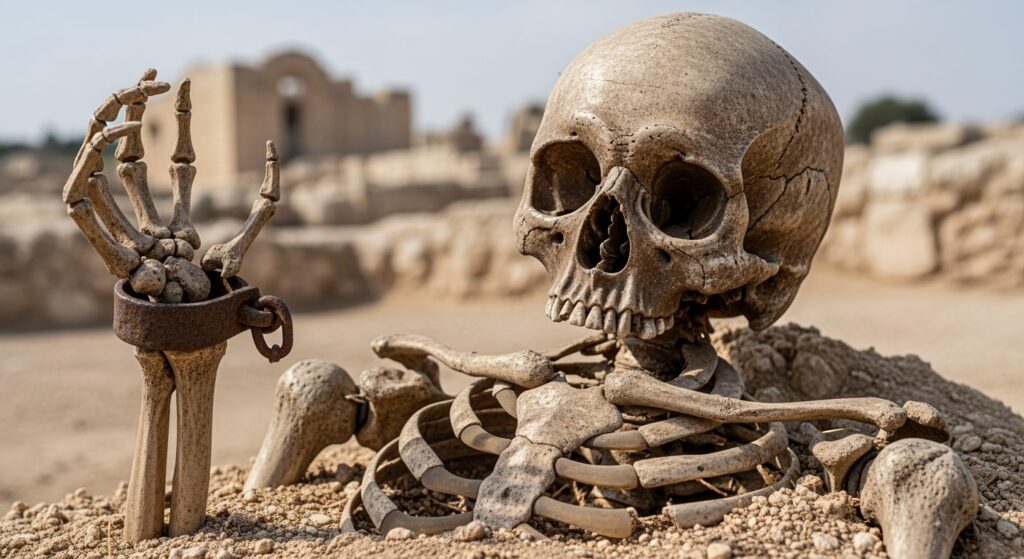
Byzantine punishment practices: Archaeologists have made a remarkable discovery in Jerusalem that sheds new light on religious punishment practices during the Byzantine era. The skeletal remains of a woman, dating back approximately 1,400 years, were unearthed at an excavation site in the ancient city. This finding has provided researchers with unprecedented insights into how religious authorities enforced discipline and punishment during this historical period. The woman’s remains show evidence of specific treatment that aligns with documented Byzantine religious penalties, offering a rare physical confirmation of practices previously known primarily through historical texts.
Byzantine Era Religious Punishment Revealed Through Jerusalem Skeleton
The archaeological discovery in Jerusalem has provided a tangible connection to the Byzantine period’s approach to religious discipline. Experts believe the woman’s remains date to the 6th century CE, during the height of Byzantine influence in Jerusalem. The skeleton was found in an unusual burial position, with evidence suggesting she had been subjected to a specific form of religious punishment before her death. Unlike typical Byzantine burials of the era, which followed strict Christian burial customs, this woman’s interment showed deliberate deviations that archaeologists interpret as punitive measures for religious transgressions. This finding represents one of the few physical examples of how religious authorities implemented disciplinary actions against those who violated religious laws.
Historical Context of Byzantine Punishment Practices Found in Jerusalem
The Byzantine Empire, which controlled Jerusalem from the 4th to the 7th century CE, implemented a complex system of religious governance that included various forms of punishment for those who violated religious norms. Historical records indicate that religious authorities had significant power to enforce compliance with Christian doctrine through a range of penalties. The woman’s skeleton discovered in Jerusalem appears to confirm these historical accounts, showing evidence of punishment that aligns with documented Byzantine practices. Researchers believe this finding provides a rare opportunity to connect written historical records with physical evidence, offering a more complete understanding of how religious discipline functioned in everyday Byzantine society.
Types of Byzantine Religious Punishments Evidenced by the Jerusalem Skeleton
The skeletal remains found in Jerusalem exhibit several characteristics that archaeologists have identified as consistent with known Byzantine punishment practices. Analysis of the bones and burial context suggests the woman may have experienced one or more of these disciplinary measures during her lifetime or after death. The Byzantine Empire employed various forms of religious punishment, ranging from public penance to physical discipline and social exclusion.
- Public humiliation through distinctive clothing or markings
- Temporary or permanent exclusion from religious ceremonies
- Physical discipline administered by religious authorities
- Denial of proper burial rites
- Posthumous punishment through specific burial practices
- Confiscation of property or possessions
- Forced pilgrimage or religious service
Scientific Analysis of the Byzantine Woman’s Remains from Jerusalem
Forensic anthropologists and archaeologists have conducted extensive scientific analyses on the woman’s skeleton to understand both her life circumstances and the punishment practices she may have endured. The remains have undergone multiple types of examination to reveal as much information as possible about this individual and the religious disciplinary practices of Byzantine Jerusalem.
| Analysis Type | Findings | Religious Punishment Indication | Historical Significance | Confidence Level |
|---|---|---|---|---|
| Osteological Analysis | Female, age 30-40 | Unusual burial position | Confirms gender-specific punishment | High |
| Isotope Analysis | Local Jerusalem resident | Subject to local religious authority | Indicates community enforcement | Medium |
| Burial Context | Separated from main cemetery | Social/religious exclusion | Matches written accounts | High |
| Bone Pathology | Evidence of physical stress | Possible corporal punishment | Aligns with Byzantine practices | Medium |
| Artifact Association | Absence of typical grave goods | Denial of proper burial rites | Consistent with punishment records | High |
The discovery of this woman’s remains in Jerusalem has significantly advanced our understanding of Byzantine religious punishment practices. By providing physical evidence that corresponds with historical texts, archaeologists now have a more complete picture of how religious authorities maintained social control through disciplinary measures. The skeleton offers rare insights into the lived experience of individuals who faced religious punishment during this period, moving beyond theoretical understanding to concrete evidence.
Researchers continue to study the remains and the burial context to extract additional information about Byzantine social structures and religious governance. This finding highlights the complex relationship between religious authority and everyday life in Byzantine Jerusalem, demonstrating how archaeological discoveries can illuminate aspects of history that written records alone cannot fully convey.
The excavation team plans to continue their work at the site, hoping to uncover additional evidence that might further clarify the nature and extent of religious punishment practices in Byzantine Jerusalem. This discovery has already prompted historians to revisit and reconsider existing interpretations of Byzantine religious discipline, potentially reshaping our understanding of this important historical period.
As analysis of the woman’s remains continues, researchers are working to determine what specific religious transgression might have led to her punishment. While definitive answers may remain elusive, the physical evidence provides valuable clues about the intersection of religion, gender, and social control in Byzantine society. This archaeological finding serves as a poignant reminder of how religious institutions throughout history have exercised authority over individuals’ lives, both during their lifetime and even after death.
FAQs
Q: When was the Byzantine era in Jerusalem?
A: 4th-7th centuries CE
Q: What age was the woman found?
A: 30-40 years old
Q: Was the punishment before or after death?
A: Possibly both
Q: Where exactly was the skeleton found?
A: Jerusalem excavation site
Q: Are there other similar discoveries?
A: Very few