Day will briefly turn to night as astronomers confirm the date of the longest solar eclipse of the century across several regions
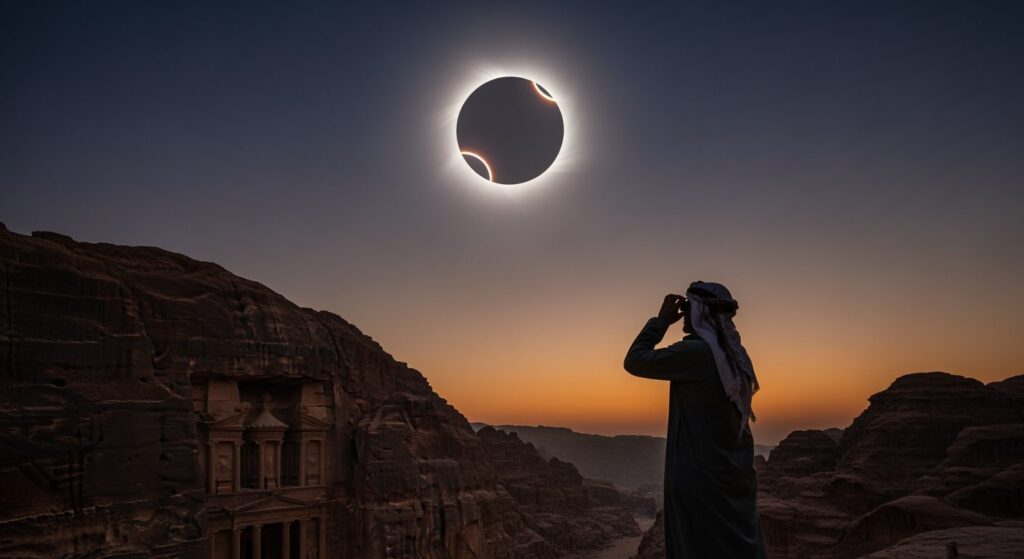
Solar eclipse 2024: Astronomers have officially confirmed the date for what will be the longest solar eclipse of the century, an extraordinary celestial event that will temporarily transform day into night across several regions of the world. This rare astronomical phenomenon, known as a total solar eclipse, occurs when the Moon passes directly between the Earth and the Sun, completely blocking the Sun’s light and casting a shadow on Earth. The upcoming eclipse is generating significant excitement among both professional astronomers and amateur skywatchers alike, as it will offer a unique opportunity to witness one of nature’s most awe-inspiring spectacles that won’t be matched in duration for the remainder of the 21st century.
Understanding the Longest Solar Eclipse of the Century and Its Path
The longest solar eclipse of the century will occur on April 8, 2024, creating a remarkable period of darkness during daylight hours. This total solar eclipse will carve a path approximately 115 miles wide across North America, beginning in Mexico, then traveling through the United States from Texas to Maine, and finally crossing parts of eastern Canada. What makes this eclipse particularly special is its duration – at certain points along the path of totality, observers will experience darkness for up to 4 minutes and 28 seconds, significantly longer than the typical total eclipse. This extended period of totality is due to the Moon being at a particularly favorable position in its orbit, appearing slightly larger in the sky and creating a more complete and longer-lasting coverage of the Sun.
Regions That Will Experience the Solar Eclipse Phenomenon
The path of totality for this century’s longest solar eclipse will cross through several major regions, offering millions of people the rare opportunity to witness this spectacular event. The eclipse will first make landfall in Mexico’s Pacific coast, crossing through cities like Mazatlán and Torreón. In the United States, the path will traverse through 13 states including Texas, Arkansas, Missouri, Illinois, Kentucky, Indiana, Ohio, Pennsylvania, New York, Vermont, New Hampshire, and Maine. Canadian provinces including Ontario, Quebec, New Brunswick, Prince Edward Island, and Newfoundland will also experience totality. Outside this narrow path, a much wider area encompassing most of North America will still witness a partial eclipse, where the Moon covers only a portion of the Sun’s disk.
| Region | Start Time (Local) | Maximum Eclipse | End Time (Local) | Duration of Totality |
|---|---|---|---|---|
| Mazatlán, Mexico | 9:51 AM | 11:07 AM | 12:32 PM | 4 min 20 sec |
| Dallas, Texas | 12:23 PM | 1:40 PM | 3:02 PM | 3 min 49 sec |
| Indianapolis, Indiana | 1:50 PM | 3:06 PM | 4:23 PM | 3 min 51 sec |
| Buffalo, New York | 2:04 PM | 3:18 PM | 4:32 PM | 3 min 45 sec |
| Montreal, Canada | 2:14 PM | 3:27 PM | 4:36 PM | 3 min 32 sec |
Scientific Significance of the Solar Eclipse for Astronomers
The upcoming longest solar eclipse of the century presents a golden opportunity for astronomers and scientists to conduct valuable research that’s only possible during such rare events. During totality, when the Moon completely blocks the Sun’s bright surface, scientists can study the Sun’s outer atmosphere, known as the corona, which is normally invisible due to the Sun’s overwhelming brightness. Researchers will deploy specialized equipment along the path of totality to gather data on solar flares, coronal mass ejections, and the Sun’s magnetic field. Additionally, this eclipse will allow scientists to observe how the sudden darkness affects Earth’s atmosphere, wildlife behavior, and local temperature fluctuations. The extended duration of this particular eclipse provides researchers with precious extra minutes to conduct their observations and experiments, potentially leading to new discoveries about our nearest star.
How to Safely View the Longest Solar Eclipse of the Century
Viewing a solar eclipse safely requires proper preparation and equipment to protect your eyes from severe damage. Looking directly at the Sun, even during an eclipse, can cause permanent eye injury or blindness. The only safe time to view an eclipse without eye protection is during the brief period of totality when the Moon completely covers the Sun. Before and after totality, proper eye protection is absolutely essential.
- Use certified solar viewing glasses that meet the ISO 12312-2 international safety standard
- Avoid using homemade filters or ordinary sunglasses, which don’t provide adequate protection
- Consider using a pinhole projector as an indirect viewing method
- Use properly filtered telescopes or binoculars only if they have certified solar filters
- Watch NASA’s live stream if you’re outside the viewing path
- Plan your viewing location in advance to avoid last-minute travel complications
- Check weather forecasts as cloud cover can obstruct visibility
As the date of this historic celestial event approaches, communities along the path of totality are preparing for an influx of eclipse chasers and tourists. Hotels, campgrounds, and viewing events are already being booked at unprecedented rates, with some locations expecting hundreds of thousands of visitors. Local authorities are developing traffic management plans and public safety measures to accommodate the crowds expected to gather for this once-in-a-lifetime astronomical event.
The April 8, 2024 eclipse represents not just a spectacular natural phenomenon but also a unique moment of collective wonder and scientific discovery. For those fortunate enough to be in the path of totality, the experience of witnessing day briefly turn to night during the longest solar eclipse of the century will likely remain an unforgettable memory for decades to come.
FAQs
Q: When will the longest solar eclipse occur?
A: April 8, 2024
Q: How long will totality last?
A: Up to 4 minutes 28 seconds
Q: Which countries will see the total eclipse?
A: Mexico, USA, Canada
Q: Can I look directly at the eclipse?
A: Only during complete totality
Q: Will another eclipse be longer this century?
A: No