The skeleton of a woman found in Jerusalem reveals religious punishment practices in the Byzantine era
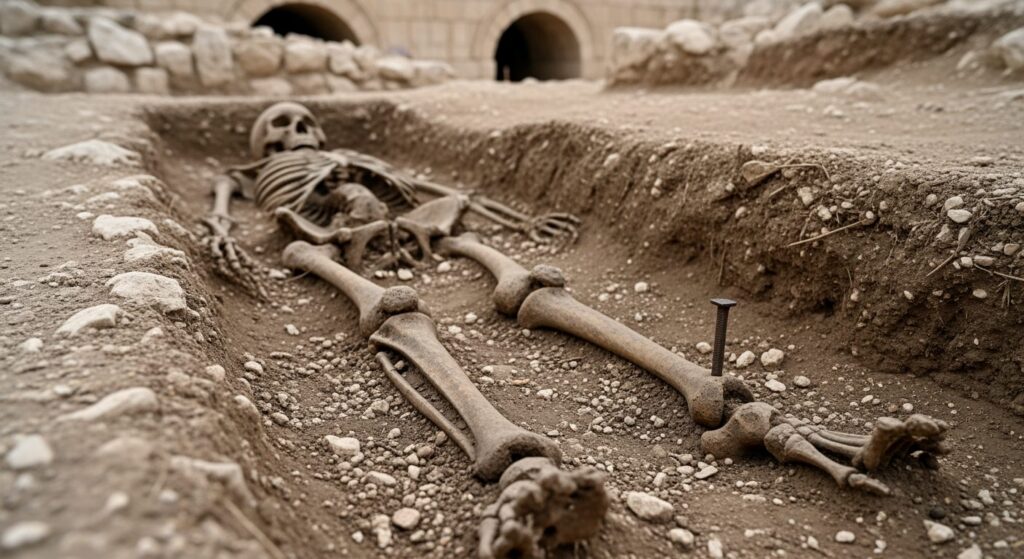
Byzantine punishment practices: Archaeologists have made a remarkable discovery in Jerusalem that sheds new light on religious punishment practices during the Byzantine era. The skeleton of a woman, unearthed during excavations in the ancient city, has revealed compelling evidence of harsh disciplinary measures imposed on those who violated religious norms of the time. This finding provides a rare glimpse into the intersection of faith, governance, and social control in a period when Christianity was becoming increasingly institutionalized throughout the Eastern Roman Empire, offering historians valuable insights into how religious authorities maintained order through physical punishment.
The Archaeological Discovery of Byzantine Punishment Evidence in Jerusalem
The skeletal remains were discovered during a routine archaeological excavation in the Old City of Jerusalem, in an area known to have been densely populated during the Byzantine period (4th-7th centuries CE). The female skeleton, estimated to belong to a woman in her mid-30s, displayed several unusual characteristics that immediately caught the attention of researchers. Forensic anthropologists noted distinctive marks on the bones that were inconsistent with natural deterioration or common diseases of the era. Instead, these markings aligned with what experts recognize as evidence of deliberate physical punishment, specifically methods documented in Byzantine religious texts but rarely confirmed in archaeological findings until now.
Understanding Byzantine Religious Punishment Through Skeletal Analysis
Detailed analysis of the woman’s remains has provided archaeologists with unprecedented insights into how Byzantine religious authorities implemented corporal punishment. The skeleton exhibited evidence of multiple punitive measures that align with historical accounts of religious discipline during this period. The woman’s wrists showed signs of prolonged binding or shackling, while certain vertebrae displayed compression patterns consistent with forced kneeling positions—a common penitential practice described in Byzantine religious texts. Most significantly, researchers identified healed fractures that suggest the woman survived these punishments and continued to live within the community afterward, indicating these were corrective rather than capital punishments.
Types of Byzantine Religious Punishments Revealed by the Jerusalem Discovery
The Jerusalem skeleton has helped researchers compile a more comprehensive understanding of Byzantine punishment practices used to enforce religious compliance. The evidence suggests a systematic approach to discipline that was likely administered by church authorities with the support of civil governance. The physical record preserved in the woman’s bones corresponds with written accounts from the period, confirming that theoretical punishments described in religious texts were indeed implemented in practice.
| Punishment Type | Physical Evidence | Religious Purpose | Duration | Target Offenses |
|---|---|---|---|---|
| Binding/Shackling | Wrist bone deformities | Restriction of movement | Variable periods | Minor religious infractions |
| Forced Kneeling | Compressed vertebrae | Penitential posture | Hours to days | Prayer negligence |
| Dietary Restriction | Nutritional deficiencies | Spiritual purification | Weeks to months | Gluttony, excess |
| Public Humiliation | Healed head trauma | Community deterrence | Single instances | Moral transgressions |
| Physical Flagellation | Rib and back injuries | Corporal penance | Multiple sessions | Serious religious violations |
Social Context of Religious Punishment in Byzantine Jerusalem
The discovery provides valuable insights into the social dynamics of Byzantine Jerusalem and how religious authority was exercised over the population. Historical context suggests that the woman may have been punished for violations of religious norms that were particularly important in Byzantine society. The archaeological evidence points to a sophisticated system of religious discipline that served multiple purposes within the community.
- Reinforcement of religious orthodoxy through visible consequences
- Establishment of church authority in daily life and social order
- Creation of deterrents for potential religious transgressors
- Implementation of a graduated scale of punishments based on offense severity
- Integration of punishment with opportunities for redemption and reintegration
- Demonstration of the church’s power to both punish and forgive
- Maintenance of social cohesion through shared religious values
This remarkable discovery in Jerusalem has significantly expanded our understanding of how religious institutions in the Byzantine era maintained social control through formalized punishment practices. The skeleton provides tangible evidence of the physical realities faced by those who violated religious norms, moving beyond theoretical knowledge based solely on written texts. As researchers continue to study these remains, they anticipate uncovering additional details about the specific religious transgressions that may have led to this woman’s punishment and how her experience reflected broader patterns of religious governance throughout the Byzantine Empire. The finding represents a rare intersection of archaeological evidence and historical accounts, offering a more complete picture of daily life and religious authority in this pivotal period of Jerusalem’s history.
FAQs
Q: When was the Byzantine era in Jerusalem?
A: 4th-7th centuries CE
Q: What punishment evidence was found?
A: Bone markings and fractures
Q: Was the punished individual male or female?
A: Female
Q: Were Byzantine punishments typically fatal?
A: Rarely
Q: Who administered religious punishments?
A: Church authorities